







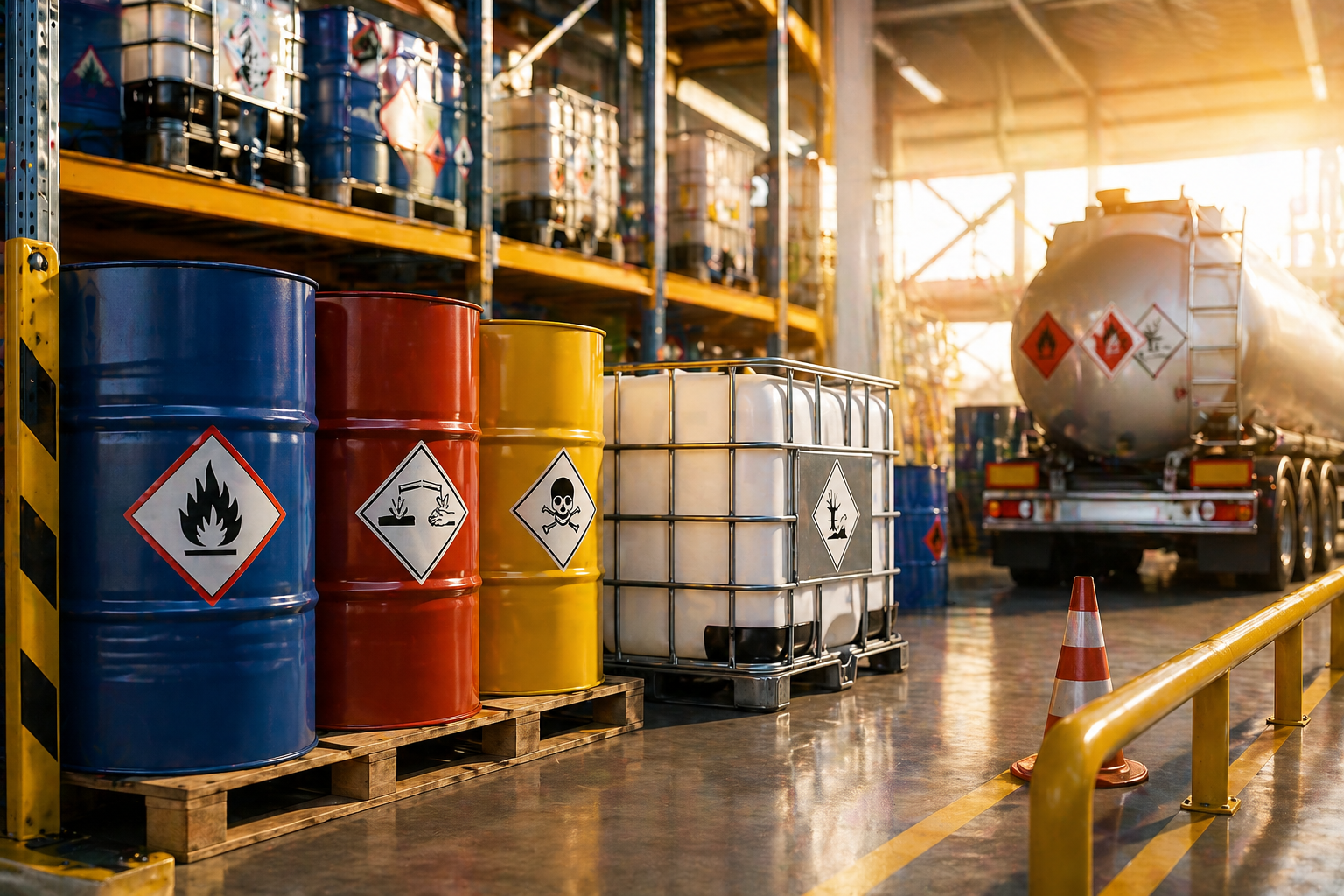
Für Unternehmen in den Energie- und Chemiesektoren ist die sichere Lagerung und der Transport von Gefahrgütern nicht nur eine betriebliche Notwendigkeit, sondern auch eine strategische Verantwortung. Entzündbare, explosive, toxische oder umweltgefährdende Stoffe können bei unsachgemäßer Handhabung ernsthafte Risiken darstellen. Daher ist es von großer Bedeutung, dass Prozesse gemäß internationalen Standards geplant und implementiert werden.
Der erste Schritt beim Umgang mit gefährlichen Stoffen ist die korrekte Klassifizierung und Kennzeichnung. Internationale Regelungen wie ADR (Straße), IMDG (See) und IATA (Luft) schreiben vor, dass Stoffe nach ihren Eigenschaften klassifiziert und mit entsprechenden Kennzeichnungen transportiert werden müssen. Diese Standards bilden die Grundlage für die Sicherheit sowohl während des Transports als auch in Lagerbereichen.
Bei Lagerungsprozessen spielt die Gewährleistung geeigneter physischer Bedingungen eine entscheidende Rolle. Temperaturkontrolle, Belüftungssysteme, Feuchtigkeitsausgleich und Explosionsschutzmaßnahmen sind besonders für flüchtige und brennbare Stoffe lebenswichtig. Zudem muss die Unverträglichkeit chemischer Stoffe untereinander berücksichtigt werden; reaktive Stoffe dürfen nicht im selben Umfeld gelagert werden.
In der Transportphase stehen die Verpackungs- und Containersicherheit im Vordergrund. Dichtheit, Stoßfestigkeit und die Einhaltung internationaler Transportstandards sind notwendig, um Risiken zu minimieren. Dabei sollten auch Vibrationen, Temperaturänderungen und Druckunterschiede berücksichtigt werden, die während des Transports auftreten können.
Personalschulung und Bewusstsein gehören zu den wichtigsten Elementen von Sicherheitsprozessen. Teams, die mit Gefahrgütern arbeiten, müssen regelmäßig über die Eigenschaften dieser Stoffe, deren Risiken und Notfallverfahren geschult werden. Geschultes Personal spielt eine Schlüsselrolle bei der Vermeidung von Unfällen und bei Interventionsprozessen.
Darüber hinaus sollte jedes Unternehmen über einen umfassenden Notfallmanagementplan verfügen. Schnelles und effektives Handeln bei Bränden, Leckagen oder Exposition ist entscheidend für den Schutz der menschlichen Gesundheit und der Umwelt. Diese Pläne müssen regelmäßig getestet und aktualisiert werden.
Heutzutage beschränken sich Sicherheitsstandards nicht nur auf gesetzliche Verpflichtungen. Sie sind auch Teil der Nachhaltigkeits- und Corporate-Responsibility-Ziele von Unternehmen. Sichere Lager- und Transportpraktiken reduzieren Umweltrisiken und stärken gleichzeitig den Ruf des Unternehmens.
Als Dream Petroleum bekennen wir uns zu den höchsten Sicherheitsstandards beim Management von Gefahrgütern. Durch die Einhaltung internationaler Gesetzgebung, betriebliche Disziplin und unseren Ansatz der kontinuierlichen Verbesserung streben wir eine sichere und nachhaltige Energielogistik an.
Zusammenfassend erfordert die Lagerung und der Transport von gefährlichen Stoffen technisches Wissen, disziplinierte Umsetzung und eine starke Sicherheitskultur. Die richtigen Systeme und ein bewusster Ansatz minimieren Risiken und sorgen für operative Exzellenz.